 Make Home Smart Let's Make Smart Home for Everyone!
If you’ve ever fumbled around late at night, half-awake, refilling your water diffuser and spilling oils all over your nightstand, you already get the appeal of going waterless.
No puddles. No mold growing in forgotten tanks. Just pure fragrance, cold-diffused straight into the air.
I’m breaking down seven of the best options on the market for every budget and room size, plus a little real-world advice you don’t usually hear until it’s too late.
What’s a Waterless Diffuser Anyway?
Let’s keep it simple: waterless diffusers use cold-air tech (sometimes called nebulization) to break essential oils into tiny particles and push them out using airflow. No heat, no water, no watery dilution, just pure oil.
Compare that to your standard ultrasonic diffuser. Those mix oils with water, vibrate a metal plate, and puff out diluted mist. The scent’s weaker, and if you’re not cleaning that tank regularly? Mold city.
Waterless diffusers avoid all that mess. They skip the water, so the oil stays pure and hits the air unfiltered. The result: your room smells like you uncorked a bottle of the real thing.
Why Do People Switch?
Honestly, I didn’t think I needed one. My old ultrasonic got the job done. But after my friend, who runs a yoga studio, started using a cold-air diffuser, she told me it made her studio smell like an actual spa instead of just “nice.” That stuck.
Here’s what makes these waterless diffusers great:
- Zero mold or bacteria risk — water plus warmth is exactly what mold wants. Take away the water, and you take away the problem.
- Stronger scent — pure oil, so you actually smell the essential oil instead of a watered-down version.
- Easy maintenance — just wipe out the reservoir with rubbing alcohol every week or so. No drama.
- Portable — lots run on batteries or USB. Toss it in your car, bring it to a hotel, set it up anywhere.
- Lower energy use — most only need a few watts. You won’t notice on your power bill.
But real talk: these use up oil faster than ultrasonic models (especially on higher settings), they cost more upfront, and they won’t humidify the air like traditional diffusers do.
So, if you live somewhere dry, you might still want your old humidifier-diffuser combo. Fair warning.
How to Choose the Right Waterless Diffuser
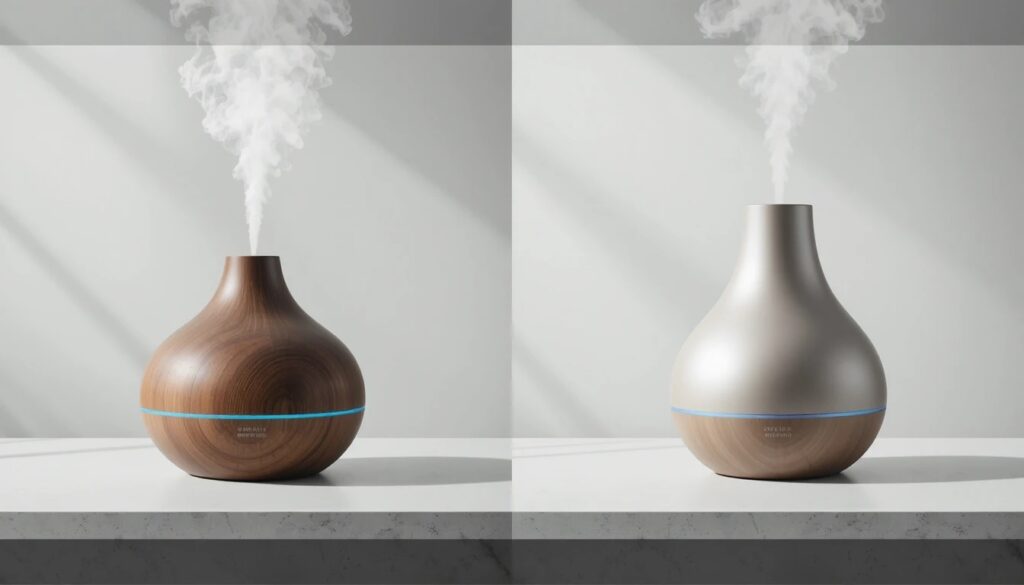
Before you start shopping, think about what you really need.
- Room size matters most. Tiny bedroom or desk? Go portable. Big living room or open layout? Find one with coverage for 500–1,000 sq ft. Some luxury models are built for huge spaces.
- Battery vs. corded. Battery models are flexible; move them anywhere. Corded ones are more powerful and perfect for all-day perfuming.
- Oil bottle compatibility. Some diffusers only work with their own special oil cartridges. Others accept regular bottles. The latter is easier and cheaper in the long run.
- Timer and intensity controls. Good models let you set intervals so you don’t blow through oil too fast or get overwhelmed by scent.
The Top 7 Waterless Diffusers Right Now
1. Aroma360 Mini Pro — Best Overall For Home Use
Coverage: up to 600 sq ft | Power: Corded
If you’re looking for a solid starter, this is it. True cold-air atomization, whisper-quiet, fits standard oil bottles. Feels premium and looks like decor, not a gadget. Adjustable intensity, so you won’t go through oil too quickly.
Best for: Bedrooms, offices, living rooms. Downside: It’s not cheap, and there’s no battery option.
2. Rocky Mountain Oils Aviva — Best Portable/Travel Pick
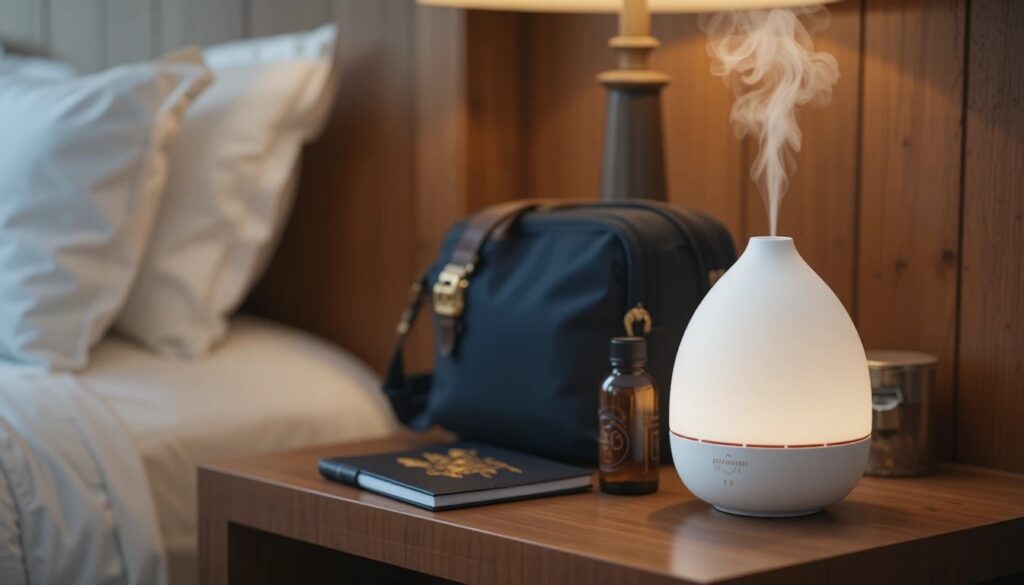
Coverage: up to 400 sq ft | Power: Battery (72+ hrs)
If you want portable, this one really lasts. 72 hours on one charge, accepts standard 15ml oil bottles, has three timer settings, and stays quiet at night.
Best for: Travel, guest rooms, desks. Downside: Don’t expect huge coverage; it’s built for smaller rooms.
3. AirScent Cold Air Diffuser — Best For Design Lovers
Coverage: up to 800 sq ft | Power: Corded
This brand’s been doing fragrance since the 1940s, so they know their stuff. It’s nearly silent, looks nice, has a refillable bottle, and doesn’t leave residue on furniture.
Best for: Large rooms, stylish spaces. Downside: You’ll need to buy bigger oil bottles, and oils are sold separately.
4. Organic Aromas Nebulizing Diffuser — Best For Aromatherapy Purists
Coverage: up to 800 sq ft | Power: Corded
This one’s for serious aromatherapy. Uses glass and wood, no plastic, no heating. Draws oil up with airflow, so you get unmatched purity.
Best for: Wellness spaces, bedrooms. Downside: Glass can be fragile, and it uses more oil.
5. Lecdura Waterless Diffuser — Best Budget Pick
Coverage: 400–700 sq ft | Power: Rechargeable Battery
Surprisingly solid for the price. Three mist modes, decent coverage, rechargeable, and quiet operation.
Best for: First-timers, budget shoppers, small rooms. Downside: The build feels basic, controls aren’t super precise.
6. Homedics SereneScent Waterless — Best For Smart Home Integration
Coverage: 350–700 sq ft | Power: Corded
Homedics is reliable and easy to use. Clean design, simple controls, quiet operation, and solid customer support.
Best for: Families, everyday home use. Downside: Design is plain; sometimes limited to their own fragrance options.
7. Shonoppy Rechargeable Waterless Diffuser — Best For Versatility
Coverage: 350–700 sq ft | Power: Rechargeable Battery
Great features for the price. Three spray modes, USB charging, nice look, and portable size. Lots of people move it around all day.
Best for: Multi-room use, renters. Downside: No oils included, and coverage drops in super open or high-ceiling spaces.
Where Should You Put Your Diffuser?
Nobody really tells you this, but placement matters.
- Bedroom: Go lavender, cedarwood, or chamomile. Use a timer so it turns off after you fall asleep. Battery-powered means no cords by your bed.
- Home Office: Rosemary and peppermint help with focus. Compact waterless diffusers won’t mess up your electronics.
- Living Room: This is your showpiece. Bigger and fancier models work here. Try inviting scents like bergamot or woodsy blends.
- Bathroom: Small and portable is best. Eucalyptus or lemon makes it feel fresher. Hide it behind the soap dish.
- Kitchen: Citrus scents cut through cooking smells. Keep the intensity low.
Want more scent and décor ideas? OurYourHome has a big guide on blending scent, lighting, and texture to change up your home environment.
Are Waterless Diffusers Safe For Pets and Kids?
Mostly, yes. The diffusers themselves are safer than candles or heated models, with no flames, steam, or electricity hazards. But the oils can be tricky. Cats are extra sensitive (avoid oregano, thyme, clove, tea tree, pine), and dogs can be affected by high concentrations.
Here’s how to play it safe:
- Stick with pet-safe oils like lavender (go easy), frankincense, and cedarwood.
- Don’t trap your pets — keep doors open so they can leave.
- Start at the lowest setting and watch your pets for any odd behavior.
Kids: Avoid eucalyptus and peppermint for under-six-year-olds. Stick to gentle citrus or lavender, low intensity.
NAHA has some good, research-backed guidelines for oil safety worth checking out.
How to Clean a Waterless Diffuser

Simple routine:
- Power off and unplug (or let the battery die down).
- Take out the oil bottle.
- Get a cotton ball or cloth, dampen it with rubbing alcohol (70%).
- Wipe inside the reservoir, nozzle, and surfaces that touch oil.
- Air dry. Done.
Do this every week or two, or whenever you switch scents. Takes five minutes, tops.
Water diffusers? They need a lot more water changes, descaling, and scrubbing. Waterless is way easier.
Quick Comparison
Diffuser | Coverage | Power | Best For
- Aroma360 Mini Pro | 600 sq ft | Corded | Overall home use
- Rocky Mountain Oils Aviva | 400 sq ft | Battery | Travel & portability
- AirScent Cold Air | 800 sq ft | Corded | Design-focused spaces
- Organic Aromas Nebulizer | 800 sq ft | Corded | Pure aromatherapy
- Lecdura Waterless | 400–700 sq ft | Battery | Budget first-timer
- Homedics SereneScent | 350–700 sq ft | Corded | Everyday family use
- Shonoppy Rechargeable | 350–700 sq ft | Battery | Multi-room versatility
So, Which One Should You Get?
- If you’re just dipping your toes in, go with the Lecdura or Shonoppy for a low-cost trial.
- If you want a centerpiece and beautiful design, try the Aroma360 Mini Pro or AirScent.
- If travel or portability is your thing, Rocky Mountain Oils Aviva is unbeatable.
Serious about aromatherapy? Organic Aromas Nebulizer is king.
Once you live with a waterless diffuser, it’s pretty tough to go back to the old mist-and-water routine. Scents are richer, maintenance is a breeze, and your space just feels cleaner.
If you’re thinking bigger about your home’s overall vibe, OurYourHome.com has plenty of ideas for upgrading ambiance, from lighting and layout to scent strategy. Check it out.
Frequently Asked Questions
Does a Waterless Diffuser Use More Essential Oil Than a Regular Diffuser?
Yeah, usually. Without any water to stretch the oil out, you end up using it a lot faster, especially if you’ve got it cranked up high. If you switch to those interval mist modes, like 30 seconds on and 3 minutes off, you’ll notice your oil lasts way longer.
Can I Use Any Essential Oil in a Waterless Diffuser?
Most waterless models handle pure essential oils and thinner fragrance oils just fine. But really thick oils like sandalwood absolute or anything resin-heavy can clog things up. Always check what your diffuser’s maker wants you to use. If your oil is super thick, just add a bit of fractionated coconut oil to thin it out.
Is a Waterless Diffuser Safe to Run Overnight?
It’s safe, but set a timer. Most good diffusers have auto shut-off or programmable intervals. Letting any diffuser run all night while you’re asleep can leave you with too much scent in the air and maybe some respiratory irritation. That’s why a half-hour on/off cycle before bed feels right.
Do Waterless Diffusers Actually Work, or is it Just Hype?
They definitely work. If you care about pure scent or getting the full therapeutic benefits, they’re great. The cold-air technology keeps the essential oil compounds intact, with no heat or water messing them up. Research backs this up. But if you’re after both a humidifier and a diffuser, stick with an ultrasonic one.
What’s the Difference Between a Nebulizing Diffuser and a Waterless Diffuser?
So, all nebulizing diffusers are waterless, but not every waterless diffuser uses nebulizing tech. Some work with fan-based cold air. Nebulizing employs Bernoulli’s Principle (airflow creates a vacuum to atomize the oil), while cold-air fans just push air over the oil. Neither uses water. Nebulizers tend to give you a stronger scent and burn through oil faster.
Are Waterless Diffusers Better For Allergies?
Usually, yes. No water means no chance of mold or mildew—a big concern with ultrasonic diffusers if you slack off on cleaning. Plus, the dry mist doesn’t add humidity, so you’re less likely to attract dust mites. Still, essential oils themselves can irritate people with allergies or asthma, so start on the lowest setting.
Can a Waterless Diffuser Cover a Large Open-Plan Room?
Depends on what you buy. Most home models cover about 350 to 800 square feet, so that’s perfect for bedrooms or living rooms. But for bigger spaces, anything above 1,500 square feet, you’ll need either a commercial-grade diffuser (like those massive Aroma360 units) or set up multiple diffusers in smart spots around the room.
How Long Do Waterless Diffusers Last?
With regular cleaning and light-to-moderate use, you can get at least 3–5 years out of a good one. Since there’s no water tank or ultrasonic plate to mess up, just pay attention to the pump and atomizer; they’re the workhorses, but proper maintenance keeps them humming for a long time.